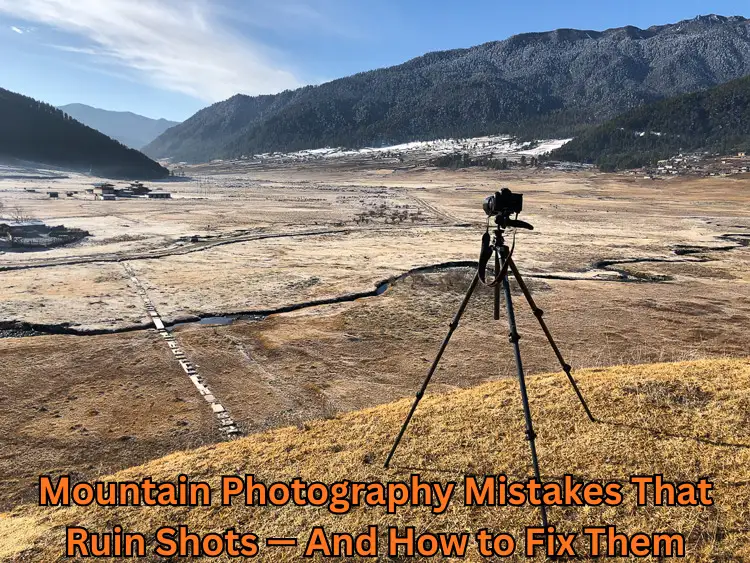
Learn the most common mountain photography mistakes and how to fix them. Capture sharper, more stunning mountain landscapes with these expert techniques.
Mountain photography is one of the most rewarding yet challenging forms of outdoor photography. Majestic peaks, dramatic skies, vast valleys, and shifting light create unforgettable scenes—but they also create countless opportunities for mistakes. Even experienced photographers sometimes end up with blurry images, washed-out skies, or dull compositions simply because mountain conditions are unpredictable and technically demanding.
If you’ve ever returned home excited to see your mountain photos, only to discover soft images, blown-out highlights, or poor compositions… you’re not alone. This guide will help you understand the most common mountain photography mistakes and teach you exactly how to fix them so you can consistently capture sharp, breathtaking, professional-quality shots.
1. Shooting Without Understanding Light
Light changes quickly in the mountains. Many photographers arrive at noon because it’s convenient, but the harsh overhead sunlight washes out colors, creates strong shadows, and removes depth.
Why it ruins your shot
- Flat or overly bright lighting ruins details
- High contrast between sky and ground
- Colors look dull instead of vibrant
- Mountains lose texture
How to fix it
- Shoot during the golden hours—first hour after sunrise or before sunset
- Try blue hour for soft pastel mountain landscapes
- If shooting midday, use clouds to your advantage for softer light
- Always check sun direction using apps like PhotoPills or SunCalc
Pro Tip: Side light reveals mountain texture beautifully. Try shooting when the sun is at a 30–45° angle.
2. Using Too Slow or Too Fast Shutter Speeds
The biggest technical mistake in mountain photography is wrong shutter speed. If the shutter is too slow, your images blur. Too fast, and you lose natural brightness in the shadows.
Why it ruins your shot
- Wind shakes the camera
- Long exposures blur grass, rocks, or distant peaks
- Fast shutter speeds create unnecessary noise
How to fix it
- Use a minimum shutter speed of 1/125s when shooting handheld
- For absolute sharpness:
- 1/250s or faster for windy mountain conditions
- 1/1000s for moving subjects such as hikers
- Use slower speeds only when on a tripod
3. Not Using a Tripod When You Actually Need One
Many beginners think tripods are optional. But in the mountains, even slight movement ruins your clarity.
Why it ruins your shot
- Micro-vibrations blur details
- Long exposure shots become unusable
- Difficult to compose accurately
How to fix it
- Bring a lightweight carbon-fiber tripod
- Use it for:
- Long exposures
- Sunrise/sunset shots
- Low-light photography
- Panorama stitching
- Use the 2-second timer or a remote trigger
Pro Tip: Hang your backpack on the tripod to stabilize it in windy conditions.
4. Ignoring Foreground Elements
Many beginners point the camera at the mountain and click. But without an interesting foreground, photos look flat and uninteresting.
Why it ruins your shot
- No sense of depth
- Composition feels empty
- The mountain appears smaller and less impressive
How to fix it
Include elements like:
- Rocks
- Flowers
- Snow patterns
- Hiking trails
- Lakes
- Trees
This creates a three-layer composition: foreground, midground, and background.
5. Overusing Digital Zoom
Digital zoom destroys quality. It magnifies pixels, not details.
Why it ruins your shot
- Creates grainy and pixelated images
- Reduces clarity
- Makes editing harder
How to fix it
- Move physically closer
- Use optical zoom lenses (70–200mm or 100–400mm)
- Crop in editing instead of using digital zoom
6. Not Checking Focus Properly
The stunning mountains, sky, and foreground require perfect focus—but many photographers rely on autofocus without checking sharpness.
Why it ruins your shot
- Foreground sharp but mountain soft
- Mountain sharp but foreground blurry
- Soft images even at high resolution
How to fix it
- Use manual focus + focus peaking
- Use single-point autofocus
- Focus one-third into the scene for landscape shots
- Try hyperfocal distance for maximum sharpness
7. Using Wrong Aperture Settings
Mountains require depth. Using too wide an aperture gives shallow focus.
Why it ruins your shot
- Some elements go out of focus
- Overexposed highlights
- Soft edges
How to fix it
Use:
- f/8 to f/11 for landscapes
- f/16 only when you want starbursts (but beware diffraction)
- Avoid f/22 unless absolutely necessary
8. Overediting and Oversaturation
Beginners often push saturation, clarity, and HDR too much.
Why it ruins your shot
- Unrealistic sky colors
- Loss of details
- Fake blue mountains or neon green grass
How to fix it
- Increase saturation by no more than 5–10%
- Use selective editing, not global adjustments
- Maintain true colors of nature
9. Not Protecting Gear From Weather
Harsh mountain weather destroys both shots and equipment.
Why it ruins your shot
- Lens fogging
- Water droplets on the glass
- Poor visibility
- Sensor dust
How to fix it
- Use lens hood
- Carry microfiber cloths
- Use UV/protective lens filters
- Keep camera warm in cold locations
10. Forgetting to Shoot in RAW
JPEG files compress details—RAW keeps everything.
Why it ruins your shot
- Blown-out highlights cannot be recovered
- Colors look flat
- Editing flexibility becomes limited
How to fix it
Always shoot RAW or RAW + JPEG.
11. Poor Composition Choices
Composition determines whether a shot looks professional or amateur.
Why it ruins your shot
- Distracting backgrounds
- Off-centered mountains
- Crooked horizon
- No leading lines
How to fix it
Use:
- Rule of thirds
- Leading lines
- Symmetry
- Natural frames (trees, cave entrances)
- S-curves
12. Standing Too Close (or Too Far)
Distance influences scale.
Why it ruins your shot
- Mountain looks tiny
- Foreground becomes distracting
- Landscape feels empty
How to fix it
- Move around
- Use wide lenses (16–35mm) for dramatic scenes
- Use telephoto lenses (70–200mm) to isolate peaks
Also Read: The Ultimate Guide to Mountain Photography for Beginners (2025 Edition)
Sources
- National Geographic Photography Guides:
https://www.nationalgeographic.com/photography - Outdoor Photographer Magazine:
https://www.outdoorphotographer.com - Photography Life Landscape Tutorials:
https://photographylife.com/landscapes - PetaPixel Mountain Photography Tips:
https://petapixel.com
FAQs :
1. What is the best time of day to shoot mountain photos?
Golden hour and blue hour are ideal for soft, dramatic, and warm lighting.
2. What camera settings are best for mountain photography?
Aperture f/8–f/11, shutter speed 1/125s+, ISO as low as possible, and RAW format.
3. Do I need a tripod for mountain photography?
It’s strongly recommended for sunrise, sunset, and long-distance shots.
4. Why do my mountain photos look washed out?
Harsh sunlight, overexposure, and lack of filters (ND or polarizer) cause this.